Introduction
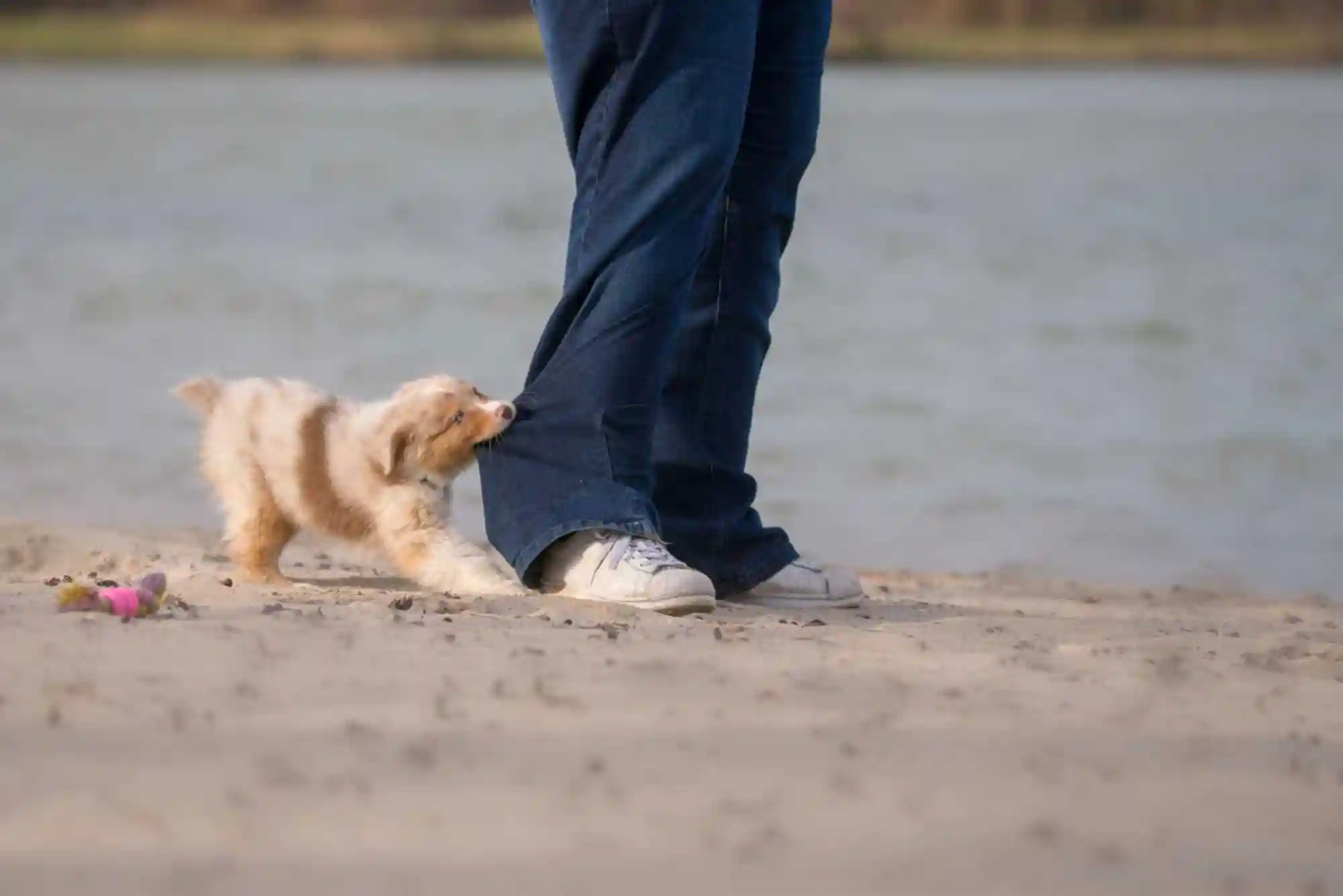
Learning how to stop a puppy from biting ankles and pant legs during walks can make daily outings much easier. Many puppy owners experience this frustrating behavior during the first months of training. A puppy may suddenly grab trousers, chase moving feet, or nip at shoes while walking.
Although this behavior can feel aggressive, it often comes from excitement, playfulness, teething, or frustration. Puppies naturally explore their surroundings with their mouths. Moving legs can also trigger their chasing instincts.
The good news is that consistent training can help your puppy develop better walking habits. Understanding the reason behind the behavior is the first step. With patience, redirection, and positive reinforcement, you can teach your puppy to walk calmly beside you.
Why Puppies Bite Ankles and Pant Legs During Walks
Before learning how to stop a puppy from biting ankles and pant legs during walks, consider what causes the behavior. Puppies rarely bite clothing without a reason. Identifying the trigger helps you choose the right training approach.
Playfulness and Excitement
Puppies often treat moving feet as exciting toys. When you walk away, your trousers swing and your shoes move. These movements can encourage chasing, grabbing, and playful nipping.
Some puppies become especially excited when they leave the house. New smells, unfamiliar sounds, and outdoor activity can increase their energy. Consequently, they may struggle to control their impulses.

Teething and Chewing Needs
Puppies experience teething discomfort as their adult teeth develop. Chewing can help relieve that discomfort. Unfortunately, loose trousers, shoelaces, and pant cuffs may become convenient targets.
Providing suitable chew toys can help meet this natural need. However, remember that teething alone does not explain every biting incident.
Overtiredness and Overstimulation
Young puppies need plenty of sleep throughout the day. When they become overtired, their ability to manage excitement often decreases. They may start jumping, barking, and biting clothing.
Busy streets, unfamiliar dogs, and long walks can also overwhelm a young puppy. In these situations, reducing stimulation may help more than continuing the walk.
How to Stop a Puppy from Biting Ankles and Pant Legs During Walks
The most effective approach combines calm responses, appropriate alternatives, and consistent rewards. Avoid expecting your puppy to learn everything during one walk. Short, successful training sessions usually work better.
Stop Moving When Biting Begins
When your puppy grabs your trousers, stop walking safely. Avoid pulling your leg away quickly because movement may encourage more chasing. Stand still and keep your response calm.
Once your puppy releases the fabric, praise the calm behavior. Then redirect attention toward a suitable toy or ask for a familiar cue. Resume walking when your puppy is ready.
If biting continues, move to a safe, quiet area. Give your puppy a brief opportunity to settle before trying again. Never drag your puppy or turn the interaction into a tugging game.
Redirect Your Puppy Toward a Toy
Redirection teaches puppies what they can bite instead. Carry a small, puppy-safe toy during walks. When your puppy begins targeting your ankles, offer the toy before the behavior becomes intense.
Praise your puppy for choosing the toy. Keep the interaction calm and rewarding. Over time, your puppy can learn that toys provide an acceptable outlet for chewing and play.
However, avoid waving the toy around your feet. This may encourage your puppy to jump toward your legs. Hold it away from your body and reward gentle engagement.
Reward Calm Walking
Positive reinforcement helps puppies understand which behaviors earn rewards. Carry small treats and reward your puppy whenever they walk beside you without grabbing clothing.
Begin in a quiet environment with few distractions. Take several steps, then reward your puppy for staying close. Gradually increase the distance as your puppy becomes more successful.
If your puppy starts biting again, reduce the difficulty. Move to a quieter area or shorten the training session. Frequent rewards for calm walking can build a stronger habit than repeated corrections.
Teach Simple Walking Cues
Basic cues can give your puppy something useful to do when excitement rises. Teach words such as “look,” “touch,” or “let’s go” indoors first.
For example, reward your puppy for looking toward you when you say their name. Practice this skill in the garden before using it during walks. Once your puppy responds reliably, use the cue when you notice early signs of ankle chasing.
Keep training sessions short and enjoyable. Puppies learn best when they can succeed without becoming frustrated.
How to Prevent Puppy Biting Before It Starts
Prevention is an important part of learning how to stop a puppy from biting ankles and pant legs during walks. Watch your puppy closely and respond to early signs of excitement.
Choose the Right Walk Length
Young puppies may struggle with long or stimulating walks. Their exercise needs depend on age, breed, health, and vaccination status. Ask your veterinarian about suitable activity levels for your puppy.
Instead of pushing through a difficult walk, choose shorter outings when necessary. Allow time for sniffing and exploring at a comfortable pace. A relaxed puppy is often better prepared to learn.
Provide Mental Stimulation
Physical activity is not the only way to support a puppy’s needs. Sniffing games, food puzzles, and simple training exercises provide valuable mental stimulation.
Before walking, spend a few minutes practicing easy cues. You can also let your puppy sniff in a safe area. These activities may reduce frustration and help your puppy focus.
Watch for Early Warning Signs
Some puppies show clear signs before biting begins. They may stare at moving feet, crouch toward your trousers, jump repeatedly, or become increasingly restless.
When you notice these signals, pause and redirect attention. Reward your puppy for checking in with you. Acting early can prevent playful nipping from becoming a repeated walking habit.
What Not to Do When Your Puppy Bites Your Clothes
Your reaction can influence whether the behavior continues. Shouting, hitting, or forcefully pushing a puppy away may increase fear or excitement. These responses can also damage trust and make training harder.
Avoid pulling your trousers away rapidly. This movement can make the fabric more interesting and encourage chasing. Instead, stop safely and redirect your puppy toward an appropriate activity.
Do not use the leash to jerk your puppy into position. Physical corrections can create discomfort and may increase frustration. Reward-based training offers a safer, more constructive way to teach walking manners.
If your puppy repeatedly becomes overwhelmed, end the session calmly. Return to a quieter environment and allow time for rest. Training should teach useful skills, not create a struggle.
When Should You Seek Professional Help?
Occasional playful nipping is common during puppyhood. However, persistent or intense biting may require additional support. Seek guidance from a veterinarian if the behavior begins suddenly or appears connected to pain or discomfort.
A qualified, reward-based dog trainer can help if your puppy repeatedly bites despite consistent training. Professional guidance is particularly useful when biting breaks the skin, causes injuries, or occurs alongside stiff body language and intense guarding.
Keep track of when the behavior happens. Note the location, duration of the walk, and events immediately before biting. This information can help a professional identify triggers and recommend an appropriate plan.
Frequently Asked Questions
Why does my puppy bite my ankles when I walk?
Puppies may bite ankles because moving feet trigger chasing and play instincts. Teething, excitement, frustration, and tiredness can also contribute. Observe when the behavior occurs to identify its likely cause.
How do I stop my puppy from biting my pant legs?
Stop moving when your puppy grabs your clothing. Avoid pulling away quickly, and redirect your puppy toward a suitable toy. Reward calm walking and practice in quiet areas before adding distractions.
Should I ignore my puppy when it bites my feet?
Remaining calm can help, but simply ignoring every incident may not be enough. Stop safely, prevent further grabbing, and redirect your puppy toward an appropriate behavior. Reward your puppy when they settle or walk calmly.
Does puppy ankle biting mean aggression?
Not necessarily. Many puppies bite ankles during play, excitement, or overstimulation. However, intense biting, repeated injuries, or concerning body language deserves professional assessment.
Will my puppy eventually stop biting my ankles?
Many puppies improve as they mature and learn better impulse control. Nevertheless, waiting alone may not solve the problem. Consistent training, suitable toys, adequate rest, and positive reinforcement help establish better habits.
Conclusion
Learning how to stop a puppy from biting ankles and pant legs during walks requires patience and consistency. The behavior often reflects normal puppy development, excitement, or difficulty managing impulses. With the right approach, you can help your puppy develop calmer walking habits.