
Introduction
Flying with dogs as checked baggage or cargo requires careful planning, suitable equipment, and knowledge of airline regulations. Although many airlines transport pets safely, their policies differ by route, aircraft, season, and destination. Understanding temperature embargoes and crate specifications can help prevent delays and protect your dog’s wellbeing.
Some airlines allow dogs to travel in the aircraft’s hold alongside passenger baggage. Others require pets to travel through dedicated cargo services. Your dog’s size, breed, health, and destination determine which option may be available.
This guide explains how checked baggage and pet cargo work, why temperature restrictions matter, and how to prepare an airline-approved travel crate.
Understanding Checked Baggage Versus Pet Cargo
Before booking a flight, understand the difference between checked baggage and air cargo. These services follow different booking procedures and may have different acceptance requirements.
Flying With Dogs as Checked Baggage
When dogs travel as checked baggage, they usually accompany their owners on the same flight. The airline transports them in an approved, ventilated compartmeBlognt beneath the passenger cabin.
This option may suit eligible pets when the airline offers the service. However, availability depends on aircraft type, route, dog size, and applicable regulations.

Owners typically check in their dogs at a designated airport counter. Airline staff inspect the travel crate, documentation, and animal before acceptance.
Flying With Dogs as Cargo
Pet cargo is a separate transportation service arranged through an airline’s cargo department or an authorized pet shipper. It may be necessary when dogs travel without their owners or exceed passenger baggage restrictions.
Cargo services can accommodate certain international routes and larger animals. However, acceptance rules vary, and some destinations require approved animal transport arrangements.
Before booking, confirm whether your dog can travel as checked baggage or must use cargo. Never assume that an airline accepting pets on one route offers the same service everywhere.
What Are Temperature Embargoes for Dogs?
Temperature embargoes are restrictions that prevent airlines from transporting animals under specified temperature conditions. These rules help reduce the risk of heat stress, cold exposure, and other environmental hazards.
Airlines may consider temperatures at departure airports, arrival airports, and connecting locations. Conditions on the ground can matter as much as temperatures during the flight.
Why Temperature Restrictions Matter
Dogs cannot regulate body temperature as efficiently as humans in every situation. High temperatures can cause dangerous overheating, particularly in short-nosed breeds.
Cold weather can also create risks, especially during prolonged airport handling. Puppies, senior dogs, and animals with existing health problems may need additional precautions.
Airlines may suspend pet transportation during extreme weather. Some impose seasonal embargoes, while others assess conditions for individual flights.
Importantly, temperature policies differ between carriers. One airline may accept a dog on a particular date, while another refuses transportation on the same route.
How to Plan Around Temperature Embargoes
Check the airline’s current animal transportation policy before purchasing tickets. Ask whether temperature restrictions apply to your complete itinerary, including connections.
Consider flying during milder parts of the day when practical. However, a cooler departure time does not guarantee acceptance if airport conditions remain unsuitable.
Choose direct flights whenever possible to reduce handling and connection risks. Allow enough flexibility to accommodate weather-related cancellations or transportation delays.
Never attempt to bypass an embargo by providing inaccurate information. If the airline refuses transportation because of unsafe conditions, discuss alternative dates or arrangements.
Airline Crate Specifications for Flying Dogs
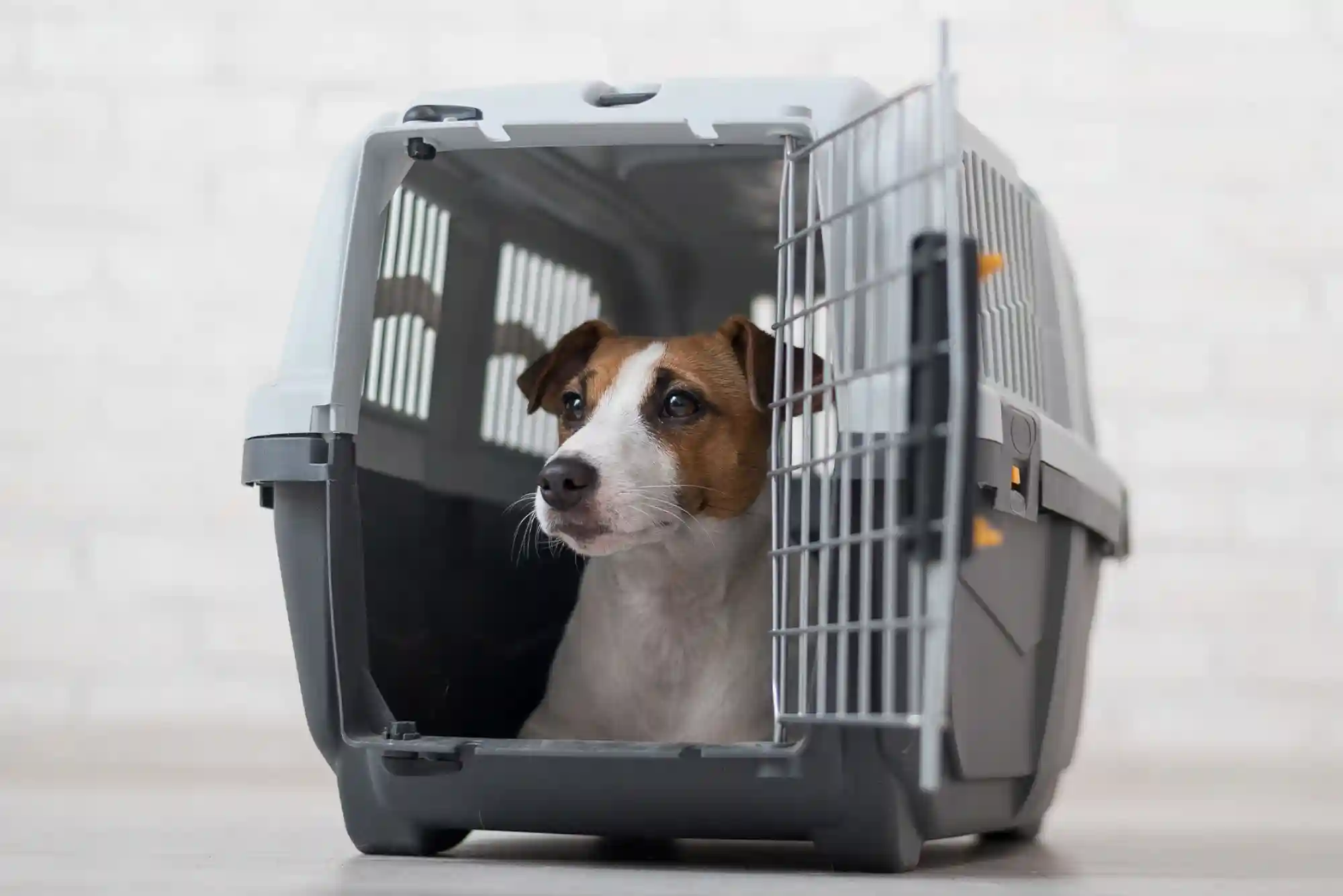
An appropriate travel crate protects your dog during loading, transportation, and unloading. Airlines generally require a secure, ventilated container that meets their specific animal transport standards.
Although requirements vary, many carriers follow standards influenced by the International Air Transport Association’s Live Animals Regulations.
Choosing the Correct Crate Size
Your dog must have enough space to stand naturally, turn around, sit, and lie down comfortably. The crate should not force your dog into an unnatural position.
Measure your dog’s height, length, and width before purchasing a kennel. Compare these measurements with the airline’s published sizing instructions.
A crate that appears large enough at home may fail an airline inspection. The airline may assess your dog’s posture and available headroom inside the container.
Avoid choosing a crate based solely on your dog’s weight. Body shape and height are equally important when determining suitable dimensions.
Crate Construction and Ventilation
Airlines commonly require rigid, durable crates designed for animal transportation. The container must withstand normal handling without collapsing or opening unexpectedly.
Ventilation openings must provide sufficient airflow. Their required placement and minimum dimensions depend on the applicable carrier and transport standard.
The door should lock securely, and the crate must prevent accidental escape. Some airlines specify particular door materials, fasteners, or additional securing methods.
Check whether the airline accepts plastic kennels, reinforced containers, or particular crate designs. Certain breeds and larger dogs may require specialized transportation arrangements.
Bedding, Water, and Food Containers
Use absorbent bedding that helps manage moisture during the journey. Avoid materials that could obstruct ventilation or create hazards if chewed.
Many airlines require accessible water containers attached to the crate. Confirm whether they must be refillable from outside without opening the door.
Follow the carrier’s instructions for feeding before departure. Avoid feeding a large meal immediately before travel unless a veterinarian advises otherwise.
Do not place loose objects inside the kennel without checking airline rules. Toys, bowls, and accessories must not compromise the animal’s safety.
Documents Required for Dog Air Travel
Documentation is another important part of flying with dogs as checked baggage or cargo. Missing paperwork can prevent boarding even when the crate meets every technical requirement.
Depending on the route, your dog may need a veterinary health certificate, vaccination records, microchip information, import permits, or an official animal export document.
International destinations can impose additional requirements, including rabies vaccination schedules and disease-related waiting periods. Some countries require advance permits or quarantine arrangements.
Contact the destination country’s official animal import authority before booking. Also, confirm whether transit countries impose separate requirements during connections.
If you are relocating internationally, consult your veterinarian well before departure. Some vaccinations, tests, and permits require weeks or months of preparation.
Preparing Your Dog for the Flight
A suitable crate and complete paperwork cannot eliminate every travel risk. Preparing your dog gradually can make the experience less stressful.
Introduce the kennel several weeks before departure when possible. Allow your dog to explore it voluntarily and rest inside with familiar bedding.
Gradually increase the time spent inside the crate. Reward calm behavior and avoid using the kennel as punishment.
Discuss your dog’s health and travel suitability with a veterinarian. This is especially important for short-nosed breeds, older dogs, puppies, and animals with breathing or heart conditions.
Do not give sedatives or calming medication without veterinary guidance. Some medications can affect an animal’s ability to cope with pressure changes and transportation stress.
On departure day, follow the airline’s instructions for exercise, feeding, hydration, and check-in. Arrive with enough time for inspection without unnecessarily extending your dog’s airport stay.
Common Mistakes to Avoid
One frequent mistake is booking a ticket before confirming pet transportation availability. Passenger reservations do not automatically guarantee space for a dog.
Another problem is purchasing a crate without checking airline specifications. An unsuitable door, inadequate ventilation, or incorrect dimensions may lead to rejection.
Owners sometimes overlook weather conditions at connecting airports. However, temperature embargoes can affect an itinerary even when the departure airport has comfortable weather.
Incomplete vaccination records and incorrectly timed health certificates can also disrupt travel. Review every requirement carefully and keep copies of essential documents.
Finally, avoid assuming that all dogs can travel in the aircraft’s hold. Breed restrictions, medical concerns, aircraft limitations, and destination regulations may prevent transportation.
Frequently Asked Questions
Can dogs fly as checked baggage or cargo?
Yes, many airlines transport eligible dogs as checked baggage or cargo. Availability depends on the airline, route, animal size, breed, health, and destination requirements.
What temperature is too hot for dogs to fly?
There is no single temperature limit that applies to every airline. Carriers establish their own restrictions, considering airport conditions and their animal transportation procedures.
What size crate does a dog need for flying?
The crate must allow your dog to stand naturally, turn around, sit, and lie down comfortably. Exact dimensions and construction requirements depend on the airline and applicable transport standards.
Can dogs travel in cargo without their owners?
Yes, some airlines offer unaccompanied pet transportation through cargo services. Booking procedures, documentation, age restrictions, and destination rules vary by carrier.
Are dogs safe when flying in cargo?
Many dogs complete air journeys successfully, but transportation involves risks. Heat, cold, stress, handling, and medical conditions can affect safety. Consult a veterinarian and select an appropriate airline service.
Should I sedate my dog before flying?
Do not sedate your dog without veterinary advice. Certain medications may affect breathing, balance, or temperature regulation. Your veterinarian can recommend appropriate preparation based on your dog’s health.
Conclusion
Flying with dogs as checked baggage or cargo requires more than purchasing a ticket. Owners must understand temperature embargoes, crate specifications, airline policies, and destination documentation.