
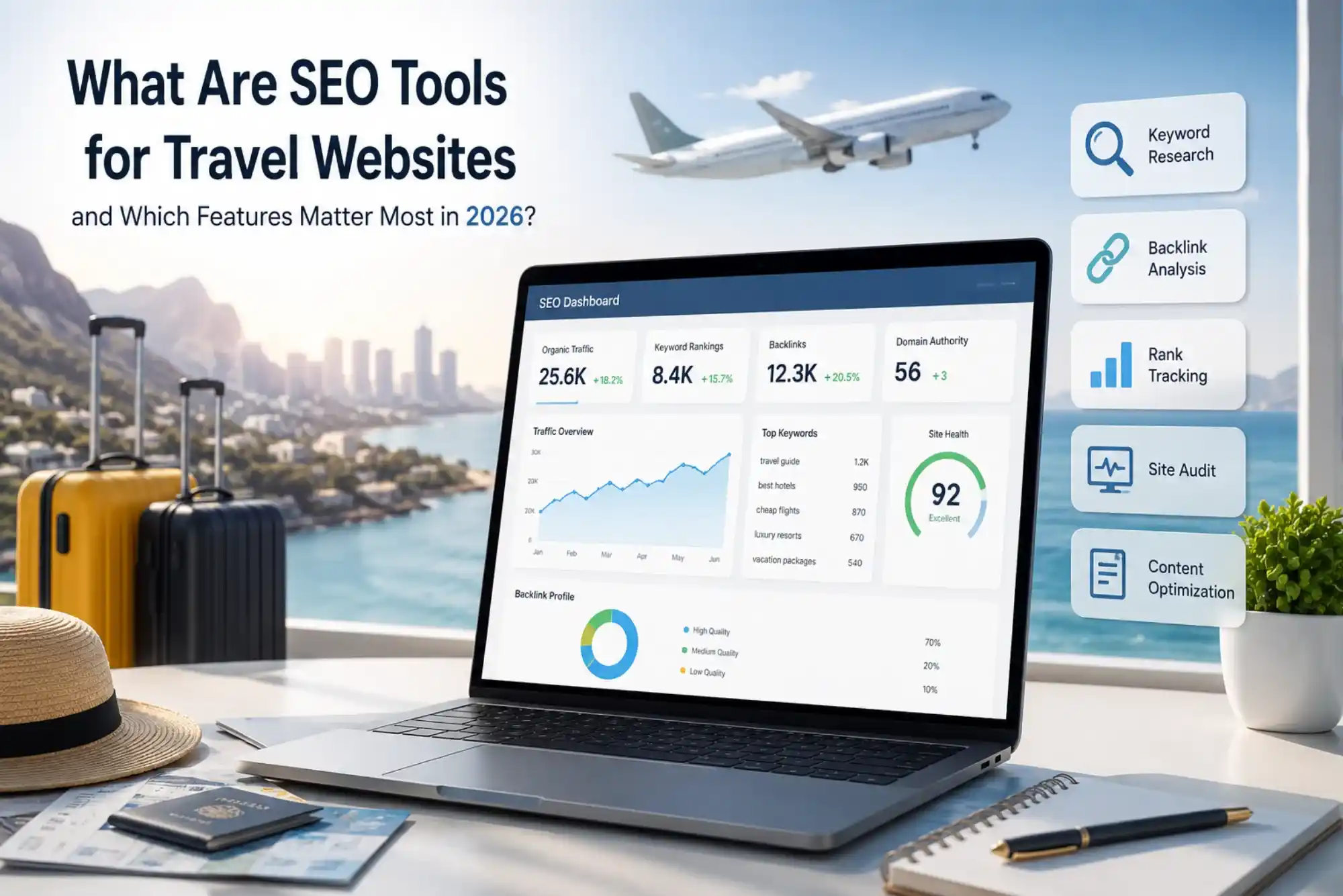
Travel websites face stronger competition in search results than ever before. From hotel booking platforms and destination blogs to tour companies and tourism agencies, every brand is competing for visibility across Google Search, Google Maps, AI-generated search experiences, and voice search platforms. That shift has made SEO tools for travel websites more important in 2026 than they were just a few years ago.
The best SEO tools now go beyond simple keyword tracking. Modern travel brands need platforms that can monitor search intent, optimize local visibility, analyze competitors, improve technical performance, and support AI-assisted content strategies. Businesses operating in tourism-related industries often discover that SEO success depends on combining several tools instead of relying on one platform alone.
Travel publishers already investing in tourism content, destination guides, and hotel-related resources often see stronger long-term growth through structured optimization strategies similar to those used in detailed tourism-focused resources such as desert tour provider comparisons in Dubai.
Why SEO Matters More for Travel Websites in 2026
The travel industry relies heavily on search visibility because travelers begin most planning journeys online. Users search for destinations, compare hotels, check tour packages, read reviews, and explore transportation options before making booking decisions.
At the same time, search behavior has changed significantly. Search engines now prioritize:
- Helpful and experience-based content
- Fast mobile performance
- Local SEO accuracy
- Structured data implementation
- Trustworthy destination information
- AI-friendly content structures
- Topical authority within travel niches
Travel websites that fail to optimize for these ranking signals often struggle to maintain visibility, even with high-quality content.

What Are SEO Tools for Travel Websites?
SEO tools for travel websites are platforms or software solutions designed to improve organic search performance. They help website owners identify ranking opportunities, analyze competitors, optimize pages, fix technical issues, and understand traveler search behavior.
These tools can support different types of travel businesses, including:
- Travel blogs
- Tour operators
- Hotel booking websites
- Airline comparison portals
- Destination tourism websites
- Travel agencies
- Adventure tourism businesses
- Local tourism guides
Most modern SEO platforms now combine AI-driven recommendations with technical analytics and content optimization systems.
Key Features That Matter Most in 2026
Not every SEO feature delivers equal value for travel websites. Some functions are now considered essential because of changing search trends and user expectations.
1. Search Intent Analysis
Keyword volume alone is no longer enough. Successful travel websites must understand why users search for certain terms.
For example:
| Search Query | User Intent | Recommended Content Type |
|---|---|---|
| Best family destinations in summer | Research and comparison | Long-form destination guide |
| Cheap hotels in Dubai Marina | Booking-focused | Hotel listing page |
| Things to do in Istanbul | Travel planning | Activity roundup article |
| Visa requirements for UAE tourists | Informational | Travel requirements guide |
Modern SEO tools now categorize keywords based on commercial, informational, and transactional intent. This helps travel businesses build content that aligns with user expectations.
2. AI-Powered Content Optimization
AI-assisted search experiences have changed how content is evaluated. Search engines now reward articles that provide direct answers, clear structures, expert insights, and semantic relevance.
Many SEO platforms in 2026 include:
- AI content scoring
- Semantic keyword suggestions
- Topic clustering recommendations
- Search entity optimization
- Featured snippet analysis
- AI readability evaluation
These features help travel websites produce more comprehensive destination guides and tourism articles.
Tourism publishers creating educational travel content often benefit from studying broader tourism-focused material such as ecotourism and sustainable travel discussions, where topical authority plays an important role in organic visibility.
3. Local SEO and Map Visibility
Local SEO remains critical for travel businesses operating in specific cities or destinations. Hotels, tour operators, restaurants, and local travel agencies depend heavily on location-based searches.
Strong SEO tools should support:
- Google Business Profile tracking
- Local keyword monitoring
- Review management insights
- Map ranking analysis
- Location-specific competitor tracking
- Multi-location SEO reporting
Travel websites with physical business operations often gain significant traffic through optimized local search strategies.
4. Technical SEO Monitoring
Technical performance directly affects rankings and user experience. Travel websites often contain thousands of pages, dynamic booking systems, and image-heavy content that can slow performance.
Important technical SEO capabilities include:
| Technical Feature | Why It Matters |
|---|---|
| Core Web Vitals tracking | Improves page experience signals |
| Broken link detection | Prevents crawling issues |
| Mobile usability analysis | Supports mobile-first indexing |
| Schema markup validation | Enhances rich results visibility |
| Indexation monitoring | Ensures important pages appear in search |
| Duplicate content analysis | Protects ranking stability |
Technical SEO is especially important for hotel portals, airline comparison websites, and tourism marketplaces with large inventories.
5. Competitor Analysis
Travel SEO is highly competitive, which makes competitor research essential. Modern SEO tools allow businesses to analyze:
- Competitor keyword rankings
- Backlink profiles
- Content gaps
- Traffic sources
- Popular destination topics
- Seasonal ranking changes
Understanding what works for competing travel brands can help publishers identify opportunities that are easier to rank for.
6. Seasonal Trend Forecasting
Travel demand changes constantly based on seasons, holidays, economic conditions, and global tourism trends. SEO tools that include forecasting features provide a major advantage.
These systems help businesses prepare content before seasonal demand spikes occur.
For example:
- Summer vacation searches increase months before travel dates
- Religious tourism queries rise before pilgrimage seasons
- Winter destination searches trend early in autumn
- Festival-related tourism searches surge before events
Websites covering family travel and international tourism trends often align content calendars with search demand patterns similar to those seen in guides about affordable family tourism destinations.
Best Types of SEO Tools Used by Travel Websites
Most successful travel websites use a combination of tools instead of relying on a single platform.
| Tool Type | Main Purpose |
|---|---|
| Keyword Research Tools | Discover search opportunities |
| Technical SEO Platforms | Monitor website health |
| Content Optimization Tools | Improve topical relevance |
| Rank Tracking Software | Measure ranking performance |
| Backlink Analysis Tools | Evaluate authority and link profiles |
| Local SEO Platforms | Strengthen map and local search visibility |
| AI SEO Assistants | Support workflow automation |
How AI Is Changing Travel SEO in 2026
AI-generated search summaries and conversational search interfaces have changed the structure of SEO content. Search engines increasingly prefer pages that answer questions directly while maintaining credibility and depth.
Travel websites now optimize for:
- Conversational search queries
- Voice search phrases
- AI search summaries
- Entity-based optimization
- Question-answer formatting
- Experience-based content signals
Travel businesses also use AI tools internally for:
- Topic generation
- Content briefs
- Translation workflows
- Keyword grouping
- Search trend forecasting
- Competitor monitoring
However, human editorial oversight remains essential because travel audiences expect accuracy, authenticity, and local expertise.
Features Travel Websites Should Prioritize First
Not every website needs enterprise-level SEO software immediately. Smaller tourism blogs and local travel businesses should prioritize the features that produce the highest impact.
For most travel websites, the following order works well:
- Keyword and search intent research
- Technical SEO monitoring
- Local SEO optimization
- Content optimization tools
- Competitor analysis
- AI workflow support
- Advanced automation systems
Businesses that manage hotel directories, destination reviews, or tourism booking pages often gain faster results by focusing on technical SEO and local visibility first.
Common SEO Mistakes Travel Websites Still Make
Even in 2026, many travel websites continue to lose rankings because of avoidable SEO issues.
- Publishing thin destination content
- Ignoring mobile page speed
- Using duplicate hotel descriptions
- Neglecting structured data
- Overusing AI-generated text without editing
- Failing to update seasonal content
- Ignoring local SEO optimization
- Targeting overly competitive keywords
Strong SEO tools help identify these weaknesses early before they affect organic visibility.
How to Choose the Right SEO Tool for a Travel Website
Choosing the right platform depends on the website’s size, goals, and content strategy.
Travel businesses should evaluate tools based on:
- Accuracy of keyword databases
- Local SEO capabilities
- Technical audit depth
- Content optimization features
- Ease of reporting
- Integration with analytics platforms
- Scalability for future growth
- AI-assisted workflow support
Many companies now combine specialized tools instead of relying on all-in-one software suites.
For additional insights into evolving tourism-related digital strategies, broader hospitality and travel industry resources such as tourism and hotel industry discussions can provide useful context.
The Growing Role of Content Authority
Search engines increasingly reward travel websites that demonstrate topical expertise. Publishing isolated articles without a clear content structure is no longer enough.
Successful travel SEO strategies now involve:
- Destination topic clusters
- Interlinked travel guides
- Hotel comparison hubs
- Travel itinerary collections
- Local experience content
- Expert travel insights
- Updated seasonal recommendations
Well-structured topical authority improves both user engagement and search visibility over time.
Detailed industry reporting from trusted digital marketing resources continues to show that content depth and search intent alignment remain major ranking factors for tourism websites. [Insert relevant reference link here]
Frequently Asked Questions
What is the most important SEO feature for travel websites in 2026?
Search intent analysis is one of the most important features because travel users search with different goals, including planning, comparison, booking, and research.
Do travel blogs need technical SEO tools?
Yes. Even small travel blogs benefit from technical SEO monitoring because page speed, mobile usability, and crawlability directly affect rankings.
Are AI SEO tools replacing traditional SEO platforms?
No. AI tools improve efficiency, but traditional SEO platforms still provide essential technical data, ranking insights, and competitor analysis.
How often should travel websites update SEO content?
Travel content should be reviewed regularly, especially seasonal guides, hotel listings, pricing information, and tourism recommendations.
Can local SEO help small travel businesses?
Absolutely. Local SEO improves visibility in map searches and location-based queries, which are highly valuable for tourism businesses.
Conclusion
SEO tools for travel websites have evolved far beyond basic keyword tracking. In 2026, successful travel SEO depends on understanding search intent, improving technical performance, strengthening local visibility, and creating authoritative content that works well in AI-driven search environments.
Travel businesses that combine strategic content planning with modern SEO platforms are better positioned to compete in increasingly crowded search results. Whether operating a destination blog, hotel portal, tourism agency, or tour company, investing in the right SEO features can significantly improve long-term organic growth, audience trust, and booking potential.
Related Reading: Free vs Paid SEO Tools for Travel Websites: Which Option Makes More Sense in 2026?
Related Reading: كل ما تحتاج معرفته عن تخصص الجلدية والحفاظ على صحة بشرتك
Related Reading: المسح الأرضي: أفضل الممارسات
Related Reading: Best AI SEO Tools for Travel Websites that improve SEO tracking and workflow automation in 2026