
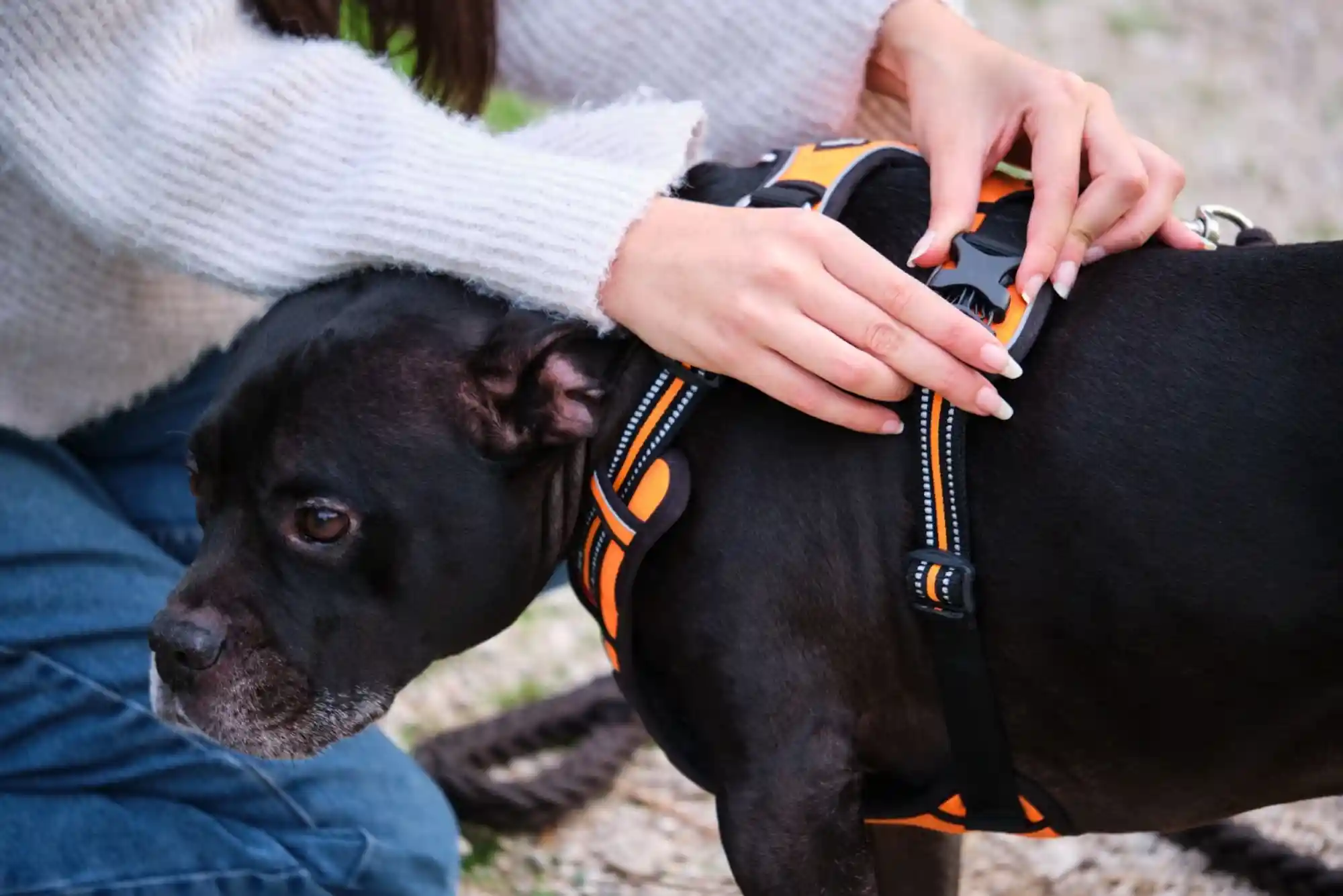
Introduction
Walking a powerful dog can become difficult when every exciting smell, squirrel, cyclist, or passing dog triggers a sudden surge forward. Pitbulls, Boxers, and other muscular breeds can generate considerable pulling force, making an ordinary collar or lightweight harness feel inadequate. That is where heavy duty no-pull harnesses can make a meaningful difference.
The right harness should not simply be tough. It needs to provide reliable control, distribute pressure comfortably across the dog’s body, resist wear, and remain secure when a strong dog suddenly changes direction. Most importantly, a harness should support training rather than become a substitute for it. Front-clip and dual-clip designs can redirect forward momentum and make pulling less effective, but loose-leash behaviour still needs to be taught consistently.
If you are researching equipment for a powerful dog, this guide explains what separates genuinely useful heavy duty no-pull harnesses from products that simply look rugged. It also covers fit, materials, leash attachment points, breed-specific considerations, and how to combine a harness with positive training.
For readers interested in modern pet equipment beyond walking gear, our Smart Pet Tech Reviews can also help you explore technology designed to make everyday pet care easier.
Why Strong Dogs Need Heavy Duty No-Pull Harnesses
A strong dog does not necessarily need the heaviest-looking harness available. What matters is whether the harness can withstand repeated tension while maintaining a comfortable, secure fit.
Pitbulls and Boxers often have broad chests, muscular shoulders, and substantial pulling power. A poorly designed harness may shift sideways, rub behind the front legs, loosen during movement, or give the dog enough leverage to continue pulling.

A good heavy-duty design should keep the leash attachment stable while distributing pressure over the chest rather than concentrating it around the neck. Front-clip harnesses can also change the direction of force when a dog pulls, helping turn the dog’s body toward the handler instead of allowing the dog to drive straight ahead.
This does not mean every no-pull harness is automatically suitable. Some designs rely on tightening or uncomfortable pressure, while others may interfere with natural movement if they are poorly shaped or incorrectly fitted. A quality harness should give you control without depending on pain.
What Makes the Best Heavy Duty No-Pull Harnesses Different?
Durability is the first thing many owners notice, but it should not be the only consideration. A harness can have thick webbing and heavy hardware yet still be a poor choice if it restricts shoulder movement or constantly rubs the dog’s skin.
Strong Materials and Reliable Hardware
For powerful pullers, look for high-quality webbing, reinforced stitching, durable buckles, and leash attachment points designed to handle regular tension. Metal hardware can provide confidence, but construction quality matters just as much as the material itself.
The harness should also remain secure when the dog twists, jumps, sniffs, or suddenly changes direction. If buckles loosen or straps migrate during normal walking, even a technically strong harness becomes unreliable.
Multiple Adjustment Points
A strong dog needs a harness that fits the individual body rather than one that simply matches a weight range.
Multiple adjustment points are particularly useful for muscular breeds because they allow you to position the harness around the chest and torso without squeezing sensitive areas. The Blue-9 Balance Harness, for example, is frequently highlighted for its six adjustment points, which allow a more individualized fit.
Front and Dual Leash Attachments
For a dog that consistently pulls, the attachment point can make a major difference. A front chest clip changes the mechanics of pulling by redirecting the dog’s forward movement.
A dual-clip design gives owners additional flexibility. You can use the front attachment during training and the rear attachment for situations where your dog is already walking calmly. This versatility is one reason dual-clip harnesses are popular among owners of strong pullers.
Best Heavy Duty No-Pull Harnesses for Pitbulls
Pitbulls are powerful, athletic dogs, so their harness needs to combine strength with freedom of movement. A bulky tactical-looking harness is not necessarily the best choice if it interferes with the dog’s shoulders.
The 2 Hounds Design Freedom No-Pull Harness is one option worth considering for determined pullers because its design combines front and rear leash connections with a martingale-style component. Its dual-connection approach can give handlers additional control during training.
Another consideration is the Ruffwear Front Range Harness, particularly for owners who want a comfortable everyday harness rather than a highly restrictive training device. Its padded construction and multiple attachment options make it suitable for regular walks while providing additional control when needed.
For a Pitbull that frequently backs out of conventional harnesses, security should become a priority. In that situation, an escape-resistant design with additional adjustment or a third strap may be more useful than simply choosing a heavier harness.
Best Heavy Duty No-Pull Harnesses for Boxers
Boxers present a slightly different challenge. They are athletic, energetic, and often extremely enthusiastic on walks. Their excitement can produce sudden lunges rather than continuous pulling.
For a Boxer, a harness needs to remain stable during quick changes in direction without restricting the chest and shoulder area. A front-clip design can help redirect the dog when excitement turns into forward lunging.
The PetSafe Easy Walk Harness is another well-known front-clip option for dogs that pull. Its design places the leash connection at the chest, allowing the handler to redirect the dog rather than simply fighting against forward momentum.
However, owners should pay close attention to fitting. A Boxer moving energetically can quickly expose a loose strap, poorly positioned chest piece, or buckle that was not properly secured.
Best Heavy Duty No-Pull Harnesses for Strong Pullers
If your dog can pull you several steps forward before you have time to react, control and security should take priority over appearance.
The Blue-9 Balance Harness is particularly interesting for strong pullers because of its adjustability and front and rear leash attachment points. Its design allows owners to customize the fit more precisely than many basic harnesses.
For everyday use, the Ruffwear Front Range is another strong candidate because it combines padding with front and rear attachment options. For dogs that need more specialized control, dual-connection systems can provide additional handling flexibility.
There is no single harness that will work perfectly for every strong dog. Body shape, behaviour, leash skills, age, coat type, and walking environment all influence the right choice.
How to Choose Heavy Duty No-Pull Harnesses for Your Dog
Start with your dog’s chest measurement rather than relying entirely on breed or weight. Measure around the widest part of the rib cage and compare the result with the manufacturer’s sizing chart.
Once the harness is on, check the fit while your dog is standing and moving. You should be able to place roughly two fingers between the harness and the dog’s body without the straps feeling loose.
The harness should not press directly against the throat. It should also avoid digging into the armpits or restricting the shoulders.
A useful test is to watch your dog walk, turn, sit, sniff, and accelerate. If the harness shifts dramatically, rubs the skin, restricts movement, or allows the dog to reverse out of it, try another size or design.
This is especially important when buying heavy duty no-pull harnesses, because thicker materials can create a false sense of security. A harness can be extremely strong but still be uncomfortable if its geometry does not suit your dog.
Do No-Pull Harnesses Actually Stop Dogs From Pulling?
A no-pull harness is not a magic solution. It can make pulling more difficult, but it does not automatically teach a dog to walk politely.
Front-clip harnesses work primarily by redirecting movement. When the dog moves forward against a front attachment, the force can turn the dog’s body instead of allowing the dog to continue directly ahead.
That can make training easier because the dog receives less reward from pulling forward.
However, owners should still reinforce loose-leash walking. Reward your dog when the leash remains slack, change direction before pulling becomes intense, and practise in environments where your dog can succeed.
For more guidance on preventing pulling, you can also explore Whole Dog Journal Pulling Prevention.
How to Use a Heavy Duty Harness During Training
Begin in a quiet environment rather than immediately testing the harness on a crowded street.
Let your dog wear the harness for short periods while receiving treats and praise. Once your dog is comfortable, attach the leash and reward calm behaviour.
During walks, reward your dog whenever they remain beside you with a loose leash. If they start pulling, avoid turning the situation into a physical contest. Instead, stop, wait for attention, or calmly change direction.
For a powerful dog, consistency matters. If pulling sometimes results in reaching another dog, crossing the road, or getting to an exciting smell, the behaviour may continue because it occasionally pays off.
The harness provides mechanical assistance, while your training teaches the actual behaviour you want.
Common Mistakes When Using Heavy Duty No-Pull Harnesses
One of the biggest mistakes is assuming that stronger equipment automatically means better control.
Some owners tighten the harness excessively because they are worried about escape. This can create rubbing and discomfort. Others choose an extremely restrictive design that prevents the dog from moving naturally.
Another common mistake is attaching the leash only to the back ring when the main objective is reducing pulling. A rear attachment may provide useful control for calm dogs, but a front attachment can offer more directional influence for dogs that pull strongly.
Owners should also inspect the harness regularly. Strong dogs place repeated stress on stitching, buckles, rings, and webbing. Look for frayed material, bent hardware, loose stitching, or damaged clips before every important walk.
Are Heavy Duty Harnesses Suitable for Everyday Walks?
Yes, provided the harness is comfortable, properly fitted, and appropriate for the dog’s activity.
A heavy-duty harness does not need to feel like protective equipment. For everyday walking, comfort should remain a major consideration. A lightweight but well-constructed harness may actually be better than an extremely bulky model.
Think about your dog’s climate, coat, walking distance, and activity level. A thick harness may be suitable for rugged outdoor use but unnecessarily warm for short walks in hot weather.
If you are researching other pet-related tools and technology, Uaebyte also offers resources covering modern technology and practical digital solutions.
Heavy Duty No-Pull Harnesses vs. Collars
For a dog that regularly pulls hard, a harness can provide a more suitable point of control than relying on a collar alone.
A collar concentrates leash pressure around the neck, while a properly fitted harness transfers the leash connection to the dog’s torso. This is one reason harnesses are frequently considered for dogs that pull heavily.
That does not mean collars have no purpose. They can still carry identification tags and may be useful in combination with an appropriately selected walking harness.
The important point is to avoid choosing equipment simply because it looks powerful. Effective handling comes from appropriate equipment, correct fit, and training.
Choosing the Right Heavy Duty No-Pull Harness
The best heavy duty no-pull harnesses combine durability, secure construction, adjustability, comfort, and effective leash positioning. For Pitbulls, Boxers, and other strong pullers, the goal should not simply be finding the toughest harness on the shelf. The right choice is the harness that gives you dependable control while allowing your dog to move comfortably and naturally.
Front-clip and dual-clip designs can be particularly helpful when pulling is the primary problem, while adjustable construction is essential for getting a secure fit. Models such as the 2 Hounds Design Freedom, Blue-9 Balance, Ruffwear Front Range, and PetSafe Easy Walk illustrate different approaches to controlling strong dogs.
Most importantly, remember that equipment is only part of the solution. Pair your harness with consistent loose-leash training, reward calm walking, and gradually increase distractions as your dog improves.
If your strong dog turns every walk into a battle, investing in a well-fitted harness and a thoughtful training routine can make those daily walks safer, calmer, and much more enjoyable for both of you.
FAQs
What is the best harness for a dog that pulls?
The best harness depends on your dog’s body shape, strength, behaviour, and walking environment. Front-clip and dual-clip designs are often useful for dogs that pull because they can redirect forward movement and provide greater handling control.
Are no-pull harnesses good for dogs?
A properly fitted no-pull harness can be a useful training aid. The key is choosing a design that does not cause unnecessary discomfort or restrict normal movement. A harness should support training rather than replace it.
What is the best harness for a Pitbull that pulls?
A strong, adjustable harness with a secure front attachment can be a good starting point for a Pitbull. Dual-clip models may provide additional control, particularly when the dog is still learning loose-leash walking.
Can a Boxer wear a no-pull harness all day?
A walking harness generally should not be treated as an all-day accessory. Remove it when appropriate, especially when the dog is unsupervised, and check regularly for rubbing or irritation.
How tight should a no-pull harness be?
The harness should be secure without being restrictive. A common fitting guideline is to leave enough room for approximately two fingers beneath the straps while ensuring the dog cannot easily back out of the harness.
Do no-pull harnesses stop dogs from pulling?
They can reduce the effectiveness of pulling by redirecting the dog’s movement, but they do not automatically eliminate the behaviour. Consistent loose-leash training and positive reinforcement remain essential.
Related Reading: How to Train a Dog to Walk Beside a Stroller Without Pulling or Lunging